Commercial Roofing Debris Guide
Planning guidance for commercial roofing tear-offs, container placement, material density, loading practices, swap schedules, and jobsite coordination.
Roofing debris is heavy
Torn-off asphalt shingles, built-up roofing, modified bitumen, and gravel ballast are dense. A container filled entirely with roofing debris will typically reach transport weight well before it reaches the top rail. Plan for extra swaps rather than a single large container.
Container placement
- Position the container as close to the drop zone as safely possible.
- Provide a stable, level surface protected from damage where required.
- Confirm overhead clearance for delivery, swap, and final haul.
- Coordinate placement with the crane, chute, or man-lift location.
Loading practices
- Distribute material evenly across the container.
- Do not fill above the top rail — overloaded containers cannot be hauled.
- Keep debris chute anchored and clear of pedestrian traffic.
- Separate flashing, fasteners, and mixed materials as required by your disposal plan.
Swap scheduling
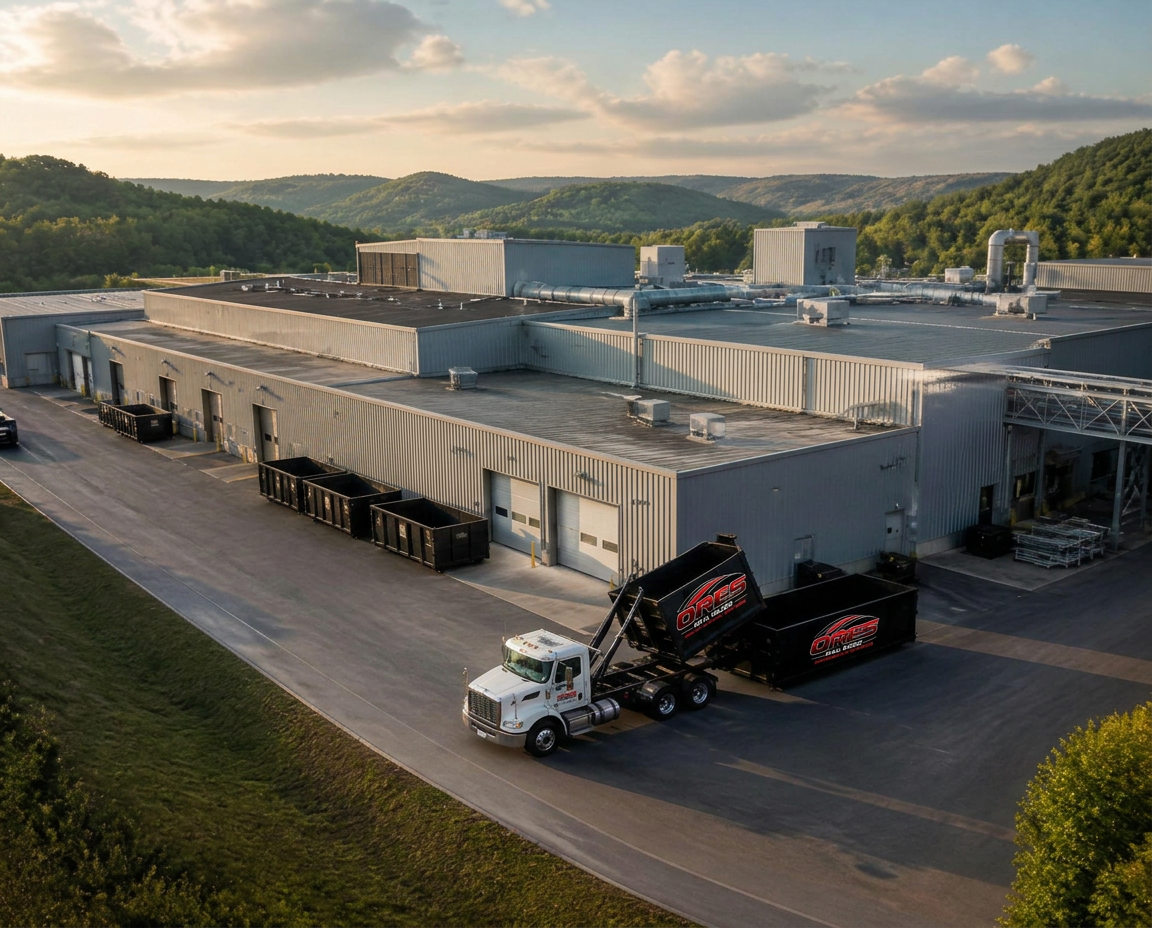
For active tear-off crews, plan swap windows around the roofing schedule so the container is never a bottleneck. ORES coordinates same-day swap service across East Tennessee when arranged in advance.
This guide addresses commercial roofing projects only. Requirements, disposal destinations, and pricing vary by project and jurisdiction. Contact ORES for a project-specific recommendation.
Need help planning your waste program?
ORES provides 30-yard and 40-yard roll-off service for commercial, industrial, municipal, and government projects across East Tennessee.